

7 Commonly Overlooked Culprits of Low Energy – and How to Fix Them
 Leo Thompson
Posted on
Leo Thompson
Posted on Table of Contents
ToggleIntroduction
Feeling constantly tired isn’t something you should simply accept as part of a busy life. While occasional fatigue is normal, persistently low energy levels are often your body’s way of signaling that something is out of balance.
Your energy influences everything—your productivity, mood, relationships, and motivation. When your energy drops, your overall quality of life follows. The good news? Many of the root causes of fatigue are fixable with the right habits and awareness.
In this guide, we’ll explore 7 commonly overlooked causes of low energy—and practical, science-backed ways to fix them.
What Your Energy Levels Are Really Telling You

Your body constantly communicates through signals, and fatigue is one of the most important. Instead of ignoring it or masking it with caffeine, it’s worth asking:
- Are you sleeping well?
- Are you fueling your body properly?
- Are stress levels too high?
Low energy is often not the problem itself—it’s a symptom of deeper imbalances.
Signs You Need to Address Your Energy Levels
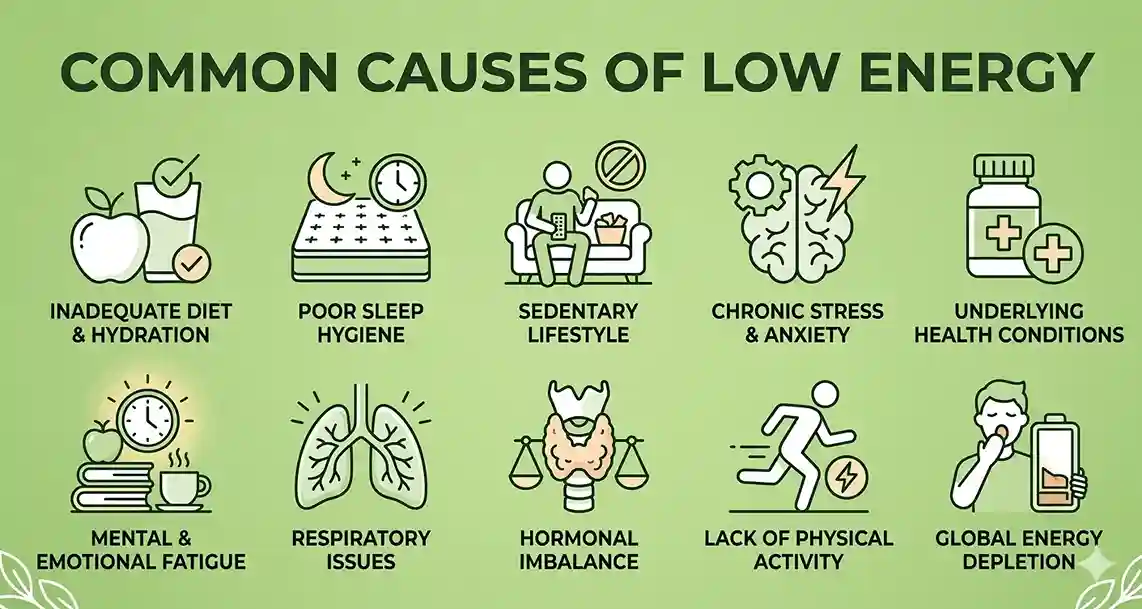
You may need to take action if you:
- Struggle to wake up without caffeine
- Feel tired throughout the day
- Experience afternoon energy crashes
- Lack energy for exercise
- Feel exhausted even after resting
If these sound familiar, it’s time to identify the root cause.
1. Circadian Rhythm Disruption
Your circadian rhythm is your body’s internal clock, regulating sleep, hormones, and energy.
The Problem
- Too much indoor time
- Excess screen exposure (blue light)
- Lack of natural sunlight
This disrupts sleep patterns and reduces daytime energy.
The Fix
- Get 15–30 minutes of morning sunlight daily
- Reduce screen exposure at night
- Use dim lighting in the evening
- Consider blue-light-blocking glasses
A balanced circadian rhythm improves both energy and sleep quality.
2. Blood Sugar Imbalance
Stable blood sugar levels are essential for consistent energy.
The Problem
High intake of refined carbs can cause energy spikes and crashes, leaving you feeling drained.
The Fix
- Start your day with protein and healthy fats
- Reduce refined carbohydrates (white bread, sugar, processed foods)
- Eat balanced meals with fiber, protein, and fats
A stable blood sugar level means steady energy all day.
3. Over-Reliance on Caffeine
Caffeine can temporarily boost energy—but it often masks deeper fatigue.
The Problem
- Blocks natural tiredness signals
- Increases stress hormones like cortisol
- Can disrupt sleep
The Fix
- Wait 60–90 minutes after waking before drinking coffee
- Avoid caffeine in the afternoon
- Never drink coffee on an empty stomach
Use caffeine strategically—not as a crutch.
4. Underactive Thyroid
Your thyroid plays a key role in energy production.
The Problem
An underactive thyroid (hypothyroidism) slows metabolism and causes fatigue.
The Fix
- Get a blood test (TSH, T3, T4 levels)
- Consult a healthcare professional if needed
Identifying thyroid issues early can significantly improve energy levels.
5. Chronic Stress Overload
Stress is unavoidable—but too much of it drains your energy.
The Problem
Chronic stress increases your allostatic load, reducing resilience and leading to burnout.
The Fix
- Prioritize rest without guilt
- Practice mindfulness or breathing exercises
- Reduce unnecessary responsibilities
- Incorporate relaxing activities (yoga, walking, nature time)
Even 2–5 minutes of deep breathing can reset your nervous system.
6. Nutrient Deficiencies
Low levels of key nutrients can silently drain your energy.
Common Deficiencies
- Vitamin B12
- Iron
- Vitamin D
- Folate
- Magnesium
The Fix
- Eat nutrient-dense whole foods
- Consider blood testing
- Supplement when necessary (with professional guidance)
Proper nutrition supports your body’s energy production at a cellular level.
7. Poor Sleep Quality
Sleep is the foundation of energy—without it, nothing else works.
The Problem
Modern lifestyles often disrupt sleep through:
- Screen use before bed
- Irregular sleep schedules
- Stress and overstimulation
The Fix
- Avoid screens at least 1 hour before bed
- Create a calming nighttime routine
- Wake up and sleep at consistent times
- Get morning sunlight exposure
Better sleep leads to better energy, focus, and recovery.
How to Naturally Boost Your Energy
To improve your energy levels, focus on these core habits:
- Prioritize quality sleep
- Get daily sunlight exposure
- Maintain stable blood sugar
- Reduce excess caffeine
- Manage stress effectively
- Address nutrient gaps
Small, consistent changes can lead to big improvements.
Final Thoughts
Low energy isn’t something you have to accept—it’s something you can fix.
By understanding the root causes of fatigue and making simple lifestyle adjustments, you can restore your energy, improve your focus, and feel more like yourself again.
Next time you feel drained, don’t ignore it. Listen to your body—it’s giving you valuable information.
Start with one change today, and build from there. Your energy—and your life—will thank you.
You Might Also Like