
- Homepage
- Daily Habits
- How Is a Habit Formed? The Brain Science Explained (Backed by Research)
How Is a Habit Formed? The Brain Science Explained (Backed by Research)
 Leo Thompson
Posted on
Leo Thompson
Posted on Building better habits is one of the most powerful ways to improve your life—but how do habits actually form? Is it really true that it only takes 21 days?
In this SEO-optimized guide, we’ll break down the science of habit formation, explain what happens in your brain, and show you practical strategies to build habits that actually stick.
Table of Contents
ToggleWhat Is a Habit?
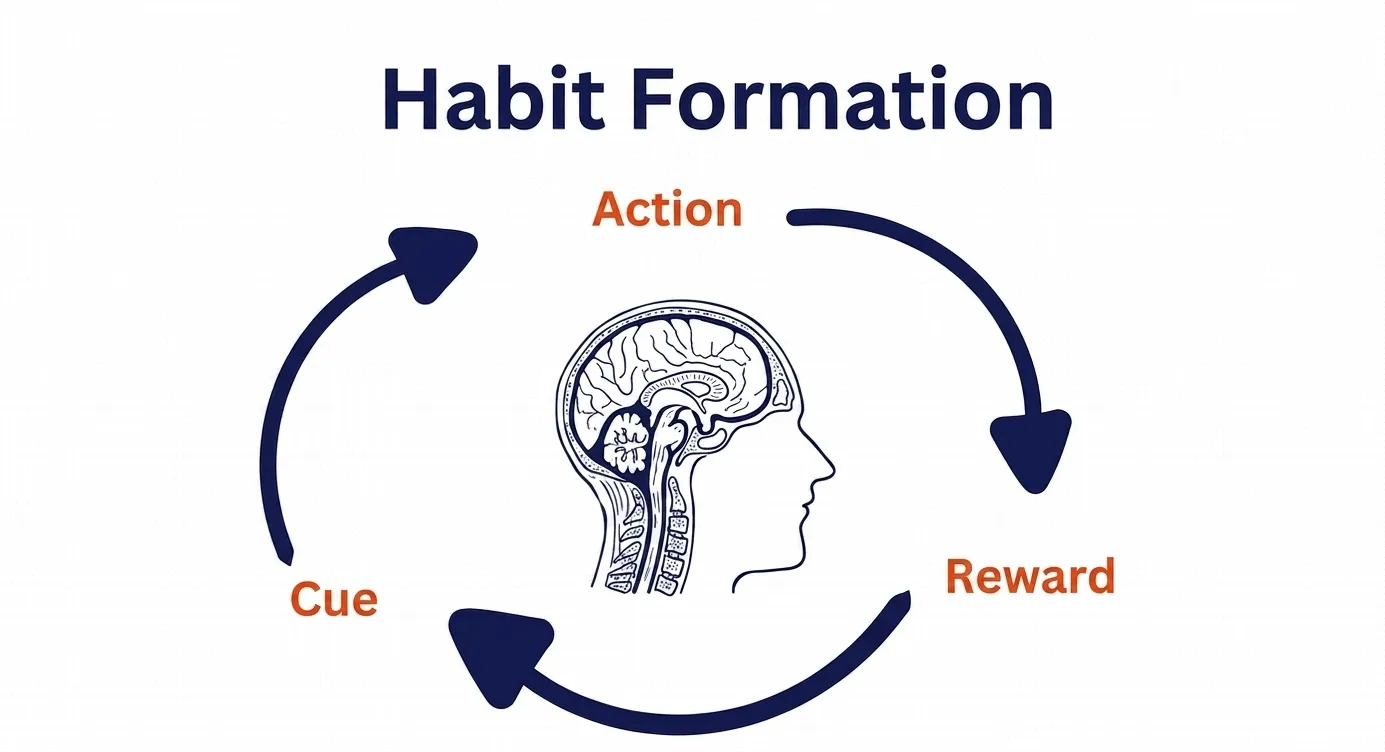
A habit is a behavior that becomes automatic through repetition. It forms when your brain connects a specific trigger (cue) to an action and a reward—creating a loop that runs with little conscious effort.
While many people believe habits take 21 days to form, research shows the average is closer to 66 days, with a range from 18 to 254 days depending on the complexity of the behavior.
The 3-Part Habit Loop

Every habit follows a simple neurological pattern:
1. Cue (Trigger)
This is what starts the habit. It can be:
- External (e.g., walking into your kitchen)
- Internal (e.g., feeling stressed)
2. Routine (Behavior)
The action you take, such as:
- Drinking coffee
- Checking your phone
- Going for a run
3. Reward (Benefit)
The positive outcome your brain receives:
- Energy boost
- Relaxation
- Social validation
The Missing Link: Craving
Over time, your brain begins to anticipate the reward as soon as it detects the cue. This anticipation creates a craving, which is what drives the habit automatically.
What Happens in Your Brain When Habits Form?
At the beginning, your brain’s cortex (responsible for decision-making) is highly active. You have to think through each step.
But with repetition:
- Control shifts to the basal ganglia
- The behavior becomes automatic
- Less mental effort is required
This is why habits feel effortless once established—and why they’re hard to break. The brain has essentially “stored” the behavior as a default program.
The Role of Dopamine in Habit Formation
Dopamine, often called the “motivation chemical,” plays a crucial role in habits.
Here’s how it works:
- At first, dopamine is released after the reward
- Over time, it shifts to the cue that predicts the reward
- Eventually, the cue alone triggers motivation
This process is known as reward prediction. It explains why:
- You crave your phone when you hear a notification
- You feel drawn to snacks when you enter the kitchen
If the expected reward doesn’t happen, dopamine drops—making you want it even more.
Why the “21-Day Habit” Rule Is a Myth
The idea that habits take 21 days comes from a 1960s book—not scientific research.
Modern studies show:
- Average habit formation time: 66 days
- Simple habits: as little as 18 days
- Complex habits: up to 254 days
A more realistic expectation is about 8–10 weeks for most daily habits.
Simple vs. Complex Habits
Not all habits are created equal.
Simple Habits
- Drinking water
- Taking vitamins
- Making your bed
Faster to automate
Complex Habits
- Cooking healthy meals
- Exercising regularly
- Learning a new skill
Require more time due to multiple steps
Understanding this prevents frustration when progress feels slow.
How to Know If a Habit Is Truly Formed
A behavior becomes a habit when:
- You do it automatically
- You start before thinking about it
- You don’t need reminders
- It feels like part of your identity
If you still need to “push” yourself, it’s not fully automatic yet—and that’s normal.
Reduce Friction to Build Habits Faster
One of the most effective strategies is making habits easier to start.
Examples:
- Lay out workout clothes the night before
- Keep healthy snacks visible
- Remove distracting apps from your phone
Small environmental changes can dramatically increase consistency.
Use If-Then Planning (A Proven Strategy)
Good intentions alone often fail. A powerful alternative is if-then planning.
Instead of saying:
“I’ll exercise more”
Say:
“If it’s 7 a.m., then I’ll go for a 20-minute walk.”
This method:
- Links a cue directly to an action
- Removes decision-making
- Increases follow-through
Research shows it significantly improves habit success rates.
How to Build Habits That Stick (Step-by-Step)
To create lasting habits:
- Choose a clear cue (time, place, or emotion)
- Start small (make it easy to succeed)
- Repeat consistently (daily if possible)
- Attach a reward (even something simple)
- Reduce friction (remove barriers)
- Use if-then plans (pre-decide your actions)
Final Thoughts
Habit formation isn’t about willpower—it’s about brain wiring and repetition.
Over time, your brain shifts behaviors from conscious effort to automatic routines. By understanding how habits work, you can design systems that make success easier and more predictable.
Start small, stay consistent, and trust the process. The habits you build today will shape your future—one repetition at a time.
Keywords: habit formation, how habits are formed, brain science habits, dopamine and habits, build better habits, habit loop, self improvement, behavior change
You Might Also Like