
Benefits of Mindfulness Meditation Go Far Beyond Relaxation – What It Is and How to Practice It

In today’s fast-paced, distraction-filled world, simply sitting alone with your thoughts can feel surprisingly difficult. Many people instinctively reach for their phones or other distractions to avoid discomfort, boredom, or stress.
But what if facing those inner experiences—rather than escaping them—was actually the key to better mental health?
That’s where mindfulness meditation comes in. Far from being just a relaxation technique, mindfulness is a powerful practice that can transform how you relate to your thoughts, emotions, and stress.
In this SEO-optimized guide, you’ll learn what mindfulness really is, its science-backed benefits, and how to start practicing it in daily life.
What Is Mindfulness?
Mindfulness is the ability to pay attention to the present moment—your thoughts, emotions, and physical sensations—with curiosity and acceptance, rather than judgment.
Instead of avoiding uncomfortable feelings, mindfulness teaches you to:
- Notice them
- Allow them to exist
- Respond with awareness rather than reaction
This mental state can be developed through:
- Formal meditation practice
- Everyday mindful moments
Why We Avoid Our Thoughts
Many people find it uncomfortable to sit quietly with their thoughts. In fact, research has shown that some individuals would rather experience discomfort than be alone with their mind.
Modern distractions—especially smartphones—make it easy to escape:
- Boredom
- Stress
- Anxiety
- Negative emotions
However, avoiding these internal experiences can backfire. Studies link this avoidance to:
- Increased anxiety
- Higher risk of depression
- Greater emotional distress
Mindfulness offers a different approach: turning toward your experience instead of running from it.
The Real Benefits of Mindfulness Meditation
While mindfulness is often associated with relaxation, its benefits go much deeper.
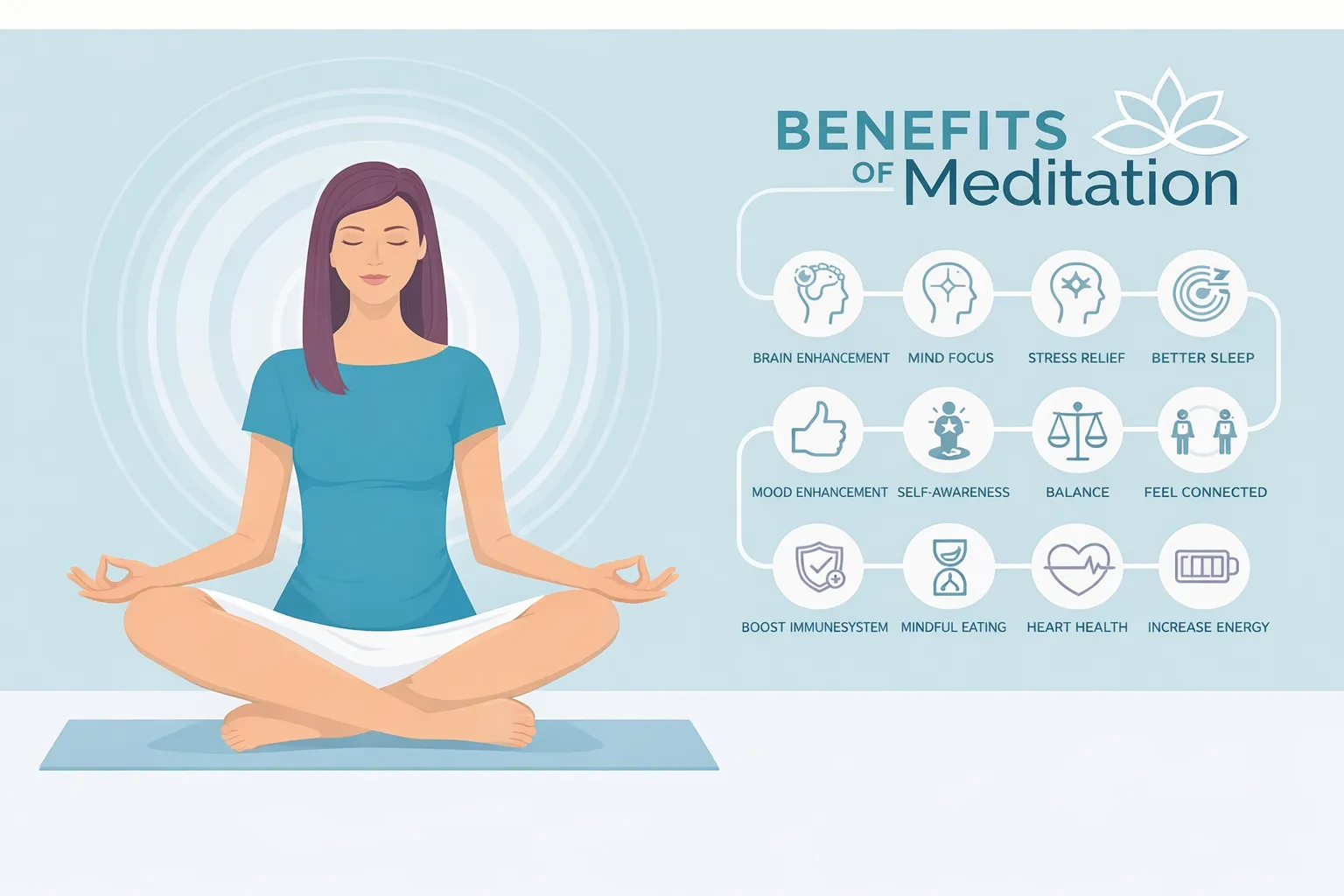
1. Improves Emotional Well-Being
Mindfulness helps you respond to emotions with acceptance, reducing:
- Overthinking
- Emotional reactivity
- Negative thought patterns
It also increases positive emotions like happiness and calmness.
2. Reduces Stress and Anxiety
Regular mindfulness practice can:
- Lower stress hormones
- Improve resilience during difficult situations
- Help you stay grounded under pressure
3. Supports Mental Health
Research shows mindfulness can help ease symptoms of:
- Anxiety
- Depression
- Insomnia
- Chronic stress
4. Enhances Self-Awareness
Mindfulness increases your ability to:
- Recognize thoughts and patterns
- Understand emotional triggers
- Make more conscious decisions
5. Improves Focus and Cognitive Function
By training attention, mindfulness can:
- Improve concentration
- Boost productivity
- Reduce mental distractions
Why Mindfulness Can Feel Difficult at First
Many beginners expect mindfulness to feel calming right away. But in reality, it can initially feel uncomfortable.
When you turn inward, you may notice:
- Restlessness
- Boredom
- Anxiety
- Physical discomfort
This is completely normal.
In fact, studies show that people often notice more unpleasant experiences than pleasant ones during early practice.
The key is not to eliminate discomfort—but to change how you relate to it.
The “Two Arrows” Concept Explained
A helpful way to understand mindfulness comes from the “two arrows” metaphor:
- First arrow: The initial discomfort (stress, pain, fatigue)
- Second arrow: Your reaction (resistance, self-criticism, overthinking)
Most suffering comes from the second arrow.
Mindfulness helps you:
- Accept the first arrow
- Avoid adding the second
This reduces overall emotional suffering and builds resilience.
How to Practice Mindfulness Meditation
Step-by-Step Beginner Practice
- Find a quiet space
Sit comfortably without distractions - Focus on your breath
Notice the sensation of breathing in and out - Observe your thoughts
Let thoughts come and go without judgment - Return to the present moment
Gently bring your attention back when it wanders - Practice acceptance
Allow all sensations and emotions to exist without trying to change them
Start with 5–10 minutes per day and gradually increase over time.
Practicing Mindfulness in Daily Life
Mindfulness isn’t limited to meditation—you can apply it anytime.
Simple Everyday Practices:
- Pay full attention while eating
- Notice your surroundings during a walk
- Focus on your breath during stressful moments
When a difficult emotion arises:
- Pause
- Notice where you feel it in your body
- Allow it to exist without reacting
A Helpful Mindset: Thoughts as “Guests”
Think of your thoughts and emotions as temporary visitors.
Instead of:
- Fighting them
- Ignoring them
Try to:
- Acknowledge them
- Let them stay briefly
- Allow them to pass naturally
This approach builds emotional flexibility and reduces stress.
How Long Does It Take to See Results?
Mindfulness is not a quick fix.
- Short sessions may not bring immediate relief
- Real benefits come from consistent practice over time
Even small daily efforts can gradually:
- Improve emotional balance
- Reduce stress
- Increase overall well-being
Common Mistakes to Avoid
- Expecting instant relaxation
- Judging yourself for “doing it wrong”
- Trying to eliminate all thoughts
- Practicing inconsistently
Remember: mindfulness is about awareness, not perfection.
Conclusion: A Healthier Relationship With Your Mind
Mindfulness meditation is more than just a way to relax—it’s a powerful tool for improving mental health, emotional resilience, and overall well-being.
Instead of escaping discomfort, mindfulness teaches you to face it with openness and acceptance.
Over time, this shift can transform how you experience stress, challenges, and even everyday life.
Start small, stay consistent, and allow yourself to explore your inner world—one moment at a time.