
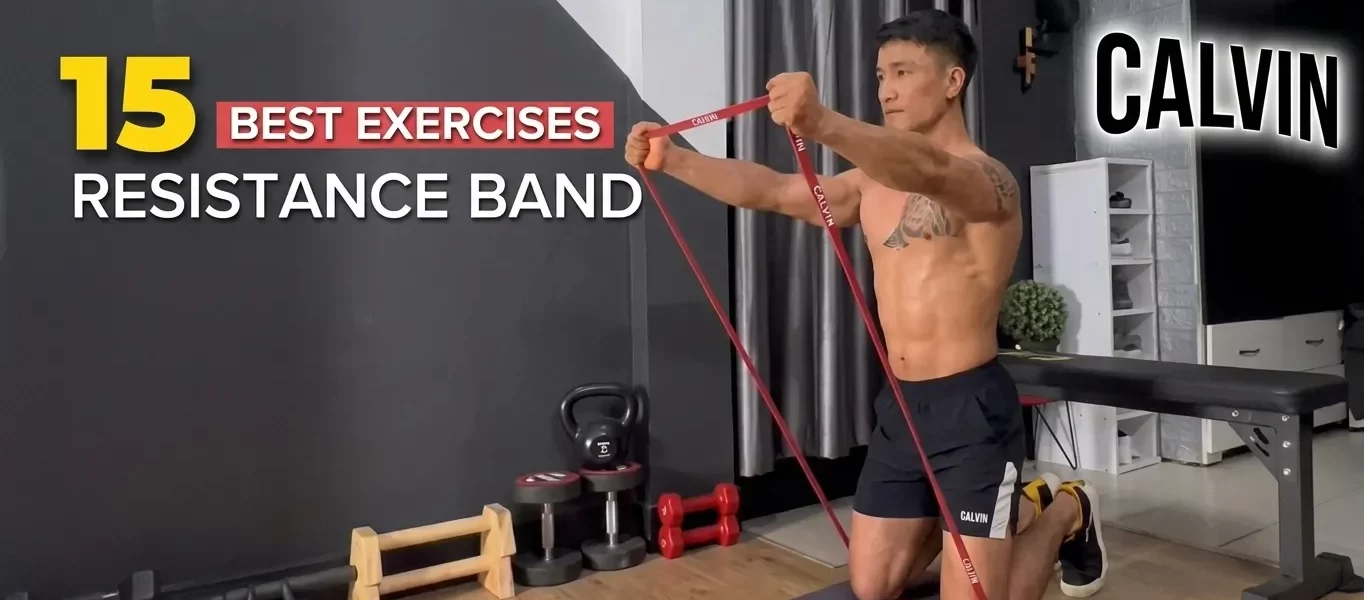
Full-Body Resistance Band Workout Plan for Beginners (Home Edition) Introduction

Starting a fitness routine doesn’t have to mean expensive gym memberships or bulky equipment. In fact, one of the most effective and beginner-friendly tools you can use at home is a simple resistance band.
This full-body resistance band workout plan for beginners is designed to help you build strength, improve coordination, and develop confidence—all from the comfort of your home. Resistance bands are affordable, portable, and joint-friendly, making them an ideal choice for anyone new to strength training.
Unlike traditional weights, resistance bands provide constant tension throughout each movement, helping you learn proper muscle activation and control. With consistent practice and gradual progression, you can achieve real results—even without lifting heavy weights.
Why Choose Resistance Bands for Home Workouts?

Resistance bands are often underestimated, but they offer several unique benefits:
- Beginner-friendly: Easy to learn and low injury risk
- Portable: Train anywhere—home, park, or while traveling
- Adjustable resistance: Use different band levels as you get stronger
- Joint-friendly: Less stress compared to heavy weights
- Versatile: Train your entire body with minimal equipment
If your goal is to start building strength safely and consistently, resistance bands are one of the best entry points.
Program Overview
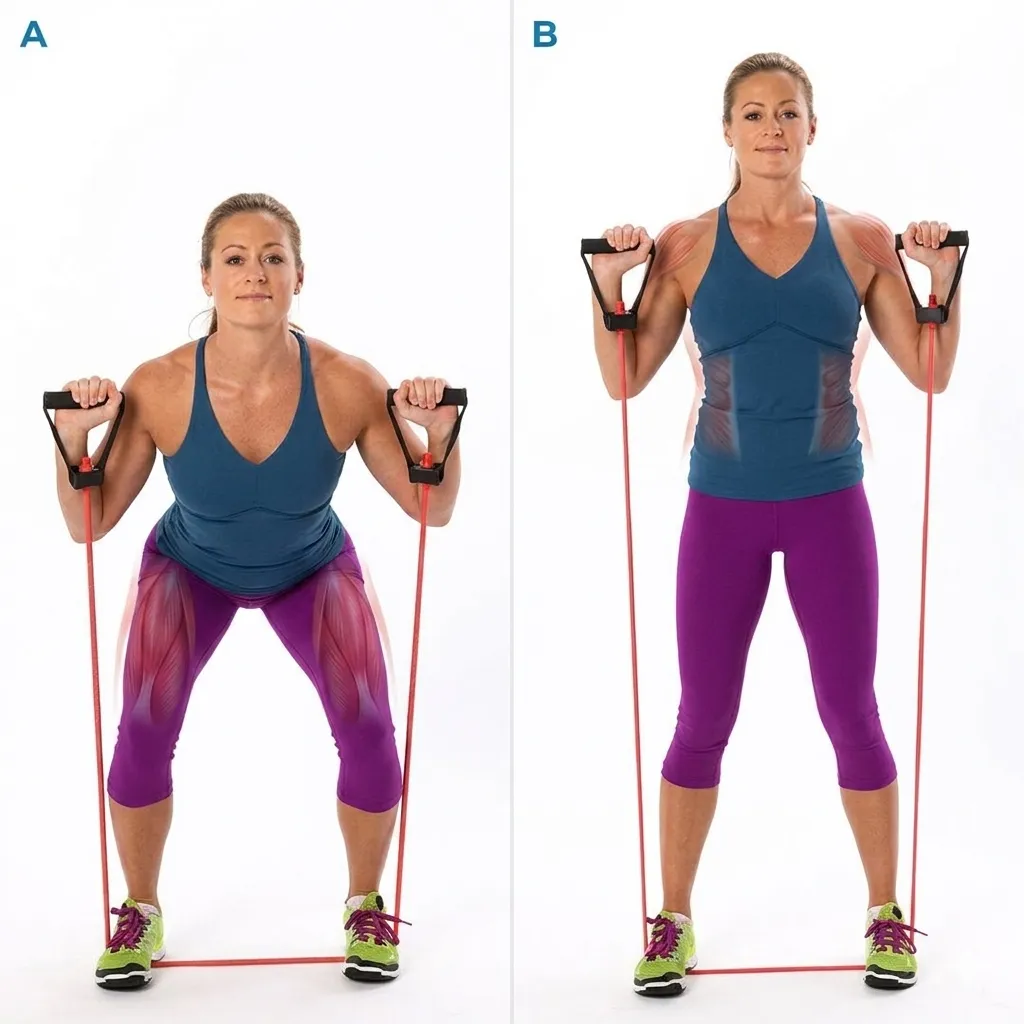
Here’s what to expect from this 4-week resistance band training program:
- Level: Beginner
- Training split: Full body
- Frequency: 3 workouts per week (Monday, Wednesday, Friday)
- Duration: 45–65 minutes per session
- Goal: Build strength, improve muscle control, and establish a fitness foundation
- Equipment: Resistance bands (multiple tension levels), optional door anchor
This structured approach ensures you train all major muscle groups while allowing enough recovery time between sessions.
Equipment You’ll Need
To get the most out of your workouts, prepare the following:
- A set of resistance bands (light to heavy tension)
- Handles or loop-style bands
- A door anchor (optional but useful)
- A yoga mat for floor exercises
- A stable anchor point (door, table leg, or railing)
Tip: Investing in quality resistance bands improves safety and long-term progression.
Weekly Training Schedule
Your weekly routine will follow a simple and effective structure:
- Monday: Full-body workout
- Tuesday: Rest or light activity
- Wednesday: Full-body workout
- Thursday: Rest or light activity
- Friday: Full-body workout
- Saturday: Optional mobility or cardio
- Sunday: Rest
This schedule helps beginners recover properly while maintaining consistency.
4-Week Progression Plan
Week 1 – Build the Foundation
Focus on learning proper form and understanding band resistance.
- Moderate intensity (RPE 7)
- Controlled movements
- Prioritize technique over intensity
Week 2 – Improve Control
Increase reps or slightly upgrade band resistance.
- Maintain good form
- Build stability and coordination
Week 3 – Progressive Overload
Start challenging your muscles more:
- Use stronger bands
- Slow down the lowering phase (eccentric)
- Push toward higher reps
Week 4 – Mastery & Strength
Finish strong with higher intensity (RPE 8):
- Maintain tension throughout movements
- Focus on control and breathing
- Reinforce proper technique
Key Exercises in the Program
Each workout targets the entire body using beginner-friendly movements:
Lower Body
- Resistance Band Squat
- Reverse Lunge
- Romanian Deadlift
- Glute Bridge / Hip Thrust
Upper Body Push
- Chest Press
- Shoulder Press
- Push-Ups (with band)
- Triceps Pushdown
Upper Body Pull
- Seated Row
- Lat Pulldown
- Face Pull
- One-Arm Row
Arms & Core
- Biceps Curl
- Hammer Curl
- Russian Twist
- Plank with Band Row
These exercises are simple to learn and highly effective for building a strong foundation.
Understanding RPE (Rate of Perceived Exertion)
RPE helps you measure workout intensity without needing exact weights.
- RPE 6: Easy effort (4–5 reps left)
- RPE 7: Challenging but manageable (3 reps left)
- RPE 7.5: Hard (2 reps left)
- RPE 8: Very challenging (1–2 reps left)
For beginners, training around RPE 7–8 ensures progress without overtraining.
Benefits of This Program
- Builds full-body strength with minimal equipment
- Improves movement control and coordination
- Encourages consistent training habits
- Reduces injury risk with low-impact exercises
- Perfect for home workouts and beginners
Limitations to Consider
- Limited maximum resistance compared to gym weights
- Muscle growth may plateau without stronger bands
- Requires proper setup for some exercises
Think of this program as a foundation phase, not the final destination.
What to Do After 4 Weeks?
Once you complete this program, you have several options:
- Continue progressing with stronger resistance bands
- Transition to dumbbells or gym training
- Try bodyweight or kettlebell programs
- Combine resistance bands with other training styles
The key is to keep progressing while maintaining good form and consistency.
Frequently Asked Questions
Is a resistance band workout effective for beginners?
Yes. It’s one of the safest and most effective ways to build initial strength.
How many days per week should beginners train?
3 days per week is ideal for recovery and consistency.
Can resistance bands build muscle?
Absolutely—especially for beginners, when used with proper progression.
How long should a workout last?
Typically 45–65 minutes per session.
What band strength should I use?
Start light and increase resistance as exercises become easier.
Final Thoughts
This Full-Body Resistance Band Workout Plan for Beginners (Home Edition) proves that you don’t need a gym to get stronger. With the right structure, consistent effort, and gradual progression, resistance bands can deliver impressive results.
By sticking to the same exercises over four weeks, you’ll develop better technique, stronger muscles, and greater confidence. Most importantly, you’ll build a habit of training consistently—which is the real key to long-term success.
This isn’t the finish line—it’s your starting point.